Transcript:
So, the other day, LifeSiteNews published an exclusive bombshell revelation that Pope Leo XIV participated in an explicit Pachamama ceremony, that they describe as clearly idolatrous, back in the 90’s when he was an Augustinian priest in South America. The evidence is based on the resurfacing of a book called Ecoteologia Agostiniana which is a Portuguese book about interpretating Augustinian theology from a Latin American perspective. In the pictures, Fr. Prevost appears to be participating in a ceremony in which participants are kneeling and gathered in a circle with the caption of the photo mentioning a celebration of Pachamama which means Mother Earth. Based on this, Mario Derkson, who is quoted in the article and was the apparent source of the story, concludes that Leo is guilty of having committed idolatry and should publicly repent now that this scandal is public. The only reason it’s public, however; is because Derksen and LifeSiteNews decided to publish it. Otherwise, it looks like it was a long forgotten intimate gathering. It should also be noted that Mario Derksen is the curator of the website “Novus Ordo Watch” which is a sedevacantist website, so if you don’t think there’s an agenda being pursued here, you’d be naïve. With that said, dismissing a claim because of its source is a genetic fallacy and a bad reason to think that the claims or arguments are simply false on those grounds. A person can be biased or have an agenda and still be telling the truth or making sound arguments.
The first thing I want to say about this is that it’s not worth losing your peace over. In fact, this is a resounding theme in the spiritual masters of our faith, like Francis de Sales, Teresa of Avila, and Ignatius of Loyola, as well as contemporaries like Fr. Jacques Philippe. They all say nothing is worth losing your interior peace over. And if headline news is having that effect on you, maybe take a break from it. At the best of times, it usually a distraction from things you have an actual influence over. In this case, if you’re a lay person like me, getting agitated about this is futile because it can’t be converted into meaningful action. Arguing with people online about it, spreading the news yourself, shaking your fist in the air, none of those things will actually fix any apparent problems in the Church. You still owe obedience to your shepherds and the Pope and you still have an obligation to grow in holiness, which sacrificing your peace through futile outrage is absolutely incompatible with.
But naturally, as you’d expect, Twitter, or X if you’re a modernist, erupted into a frenzy of hot takes and anathemas sent in every possible direction by the keyboard inquisition. So, I wanted to address the topic for the sake of people who are finding their faith challenged by it with this disclaimer: I’m not journalist and I haven’t poured over the details of this story to the degree that others have, so I’m sure there are lots of things people can point out about it that I’m unaware of. But, I also think there’s a delusion that is easy to fall into with online intrigue like this, in that, if you devote hours of scrolling and commenting and obsessing over the latest trending topic, then it becomes easy to convince yourself that you’ve done the necessary due diligence and thorough examination of the evidence and are therefore above any accusation of making rash judgements about it. But, endlessly pouring over insufficient evidence doesn’t mean you’ve somehow produced more evidence that make a conclusion about it prudent and measured. It just means you’ve taken an obsessive interest in something that is probably a serious distraction from the duty of the moment. In this case, we have photos from almost 30 years ago, that without the caption below, could be depicting just about anything. It could be a wholesome prayer circle. It could be an example of ecumenism gone too far. It could be an instance of an American following along in something he didn’t understand because he doesn’t speak Portuguese. It could be that someone miscaptioned the photo. It could be that he was caught unawares and instead of risking offending his host or his company, he went through the motions. It could also be that he was breaking the 1st commandment.
But do we know one way or the other, without a doubt? No, because there are many possible alternative explanations here. There’s no definite proof that he committed idolatry and if you want to insist that it is proof, you have to also demonstrate that he was actually worshipping something other than God - that he was INTENTIONALLY giving divine worship or Latria to some object other than God and that he intended to do so. And I remember what film photography was like back in the 90s and I can speak as an authority that we didn’t have the resolution back then to capture intent the way we do now. That doesn’t mean there’s nothing to be concerned about here. Certainly syncretism as an evil substitution for ecumenism is something that has been far too pervasive in the Church for the past 60 years or so and that is something that Church authorities should take seriously and want to correct. And here’s the thing. I lived through the 90’s, dude, and those were crazy times. In fact, if you got a hold of my family home videos, you’d find instances of me bowing down to images that have nothing to do with proper worship because I, like every youth in the aftermath of the Karate Kid movies, was enrolled in a Karate dojo and at every class, there was an opening ceremony in which an image of the founder of our branch of Karate was hung on the wall, and we turned to it and bowed down in prostration to it, as well as to our senseis. Was I committing idolatry. No, because nothing about that in my mind or will was intended to be an act of divine worship.
And that’s not all. I’ve also been guilty of a whole variety of sins in my past, many I no longer struggle with, but if I did, they would certainly disqualify me from doing this kind of work. Now imagine if someone were able to produce evidence, like photos of these past sins and bring them to light today. It’s the kind of thing that would dismay a lot of people and likely discourage them from ever listening to anything I have to say again. But this is the thing about Christianity. 1 Corinthians 1:27 says “But God chose the foolish things of the world to shame the wise; God chose the weak things of the world to shame the strong.” The fact that God can use someone like me, or Pope Leo to bring about his will, is a way of using weak things of the world to shame the strong. And Hebrews 8:12 says, “For I will be merciful towards their iniquities, and I will remember their sins no more.” So on what grounds do we have to dig up the past behaviour of our ecclesiastical superiors, assume the worst about it, assume they haven’t repented, and then demand that they do so publicly because it’s now public, because we made it public? Nothing about that is Godly.
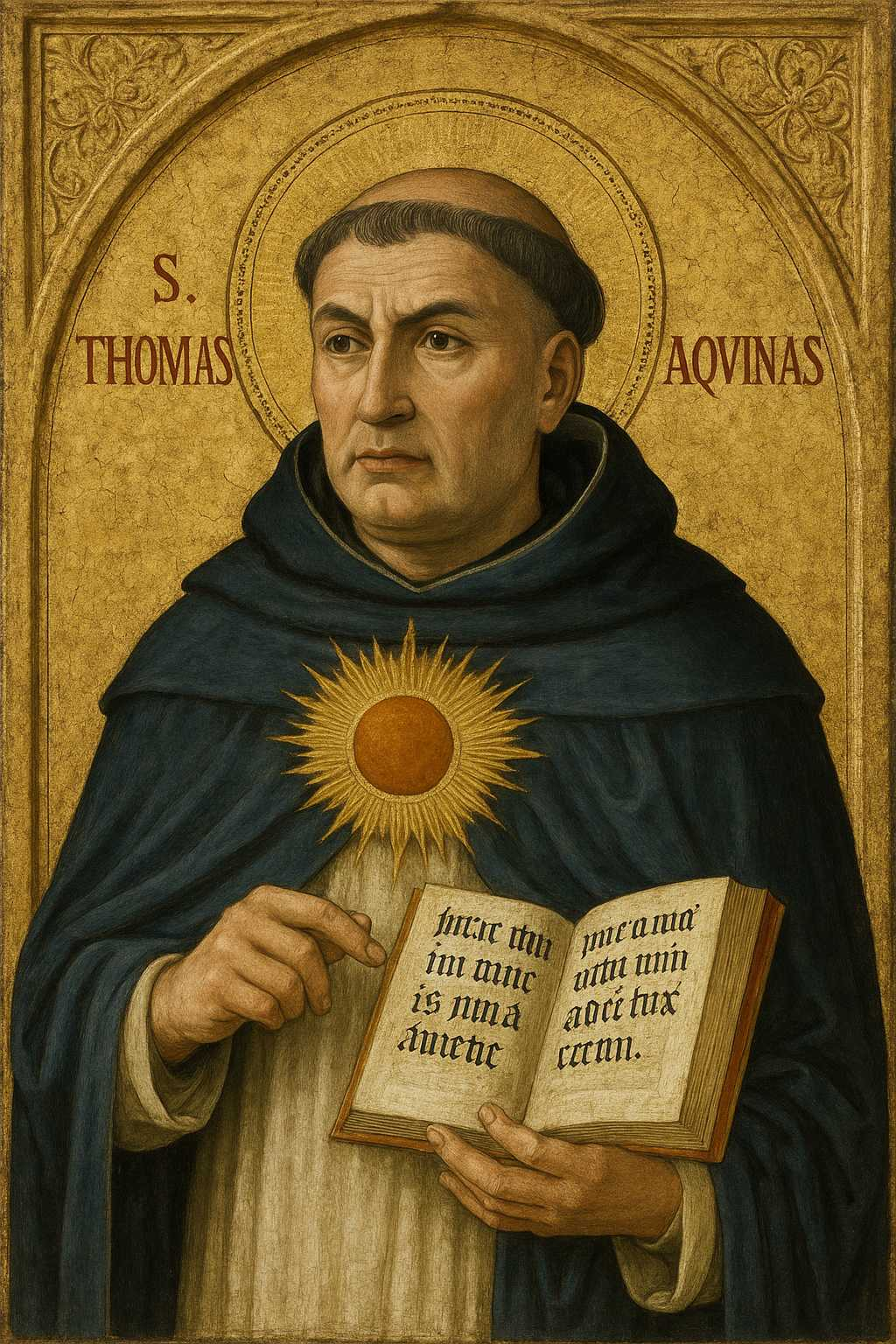
And you might point out that I wasn’t a priest or even Catholic when I was in Karate and he should have known better. Maybe that’s true, but at the same time, when I started exploring my faith, I was something of a blank slate. I was approaching it fairly open and just wanted to learn what it was. He went to seminary in the 70s and 80s and if you’re convinced that the 90s were a crazy time, like I just tried to assure you, then the 70s and 80s were even worse. He was likely taught all kinds of things about ecumenism that are totally contrary to the tradition of the Church. And I’ve met lots of people like this. When I was young and still finding my place in the Church, I founded a Young Adult Ministry because I didn’t have any friends as a new convert. And one of the up and coming priests in our Archdiocese as our chaplain, who, the more I got to know him and discuss topics for the events, the more I realized, he was completely unfamiliar with the thought of St. Thomas Aquinas – the perennial doctor of the Church. And that doesn’t happen by accident. The Magisterium has said, multiple times, that St. Thomas should be the standard for seminary formation. So, the fact that so many priests have specifically not read St. Thomas is actually a deliberate act of rebellion by their formators from an era in which that was the norm. And again, this all presupposes that those blurry images are all you need to know that this was a willful act of idolatry. But I don’t even see any statues or graven images in the pictures that were uncovered. I don’t see anything here that suggests an idol was even involved. For all we know, this was something as innocuous as a Christianized summer solstice celebration. So, jumping to rash judgements that insist this is, beyond any reasonable doubt, proof that Pope Leo committed idolatry as a younger clergyman, is uncalled for. And in case it needs repeating – rash judgement is a grave sin.
But as with the so-called Pachamama incident with Pope Francis, gaslighting and telling people there’s nothing to be concerned about and nothing to see here, isn’t an appropriate response either. Because the use of images in the Church is fairly clearly defined and something we’ve really lost track of in the age of modern art and ecumenism. And thanks be to God, we have councils that define the parameters for us, like Nicaea II, in the 8th century, which resolved the iconoclasm controversy. So, iconoclasm was a heresy that said that any use of sacred art in icons or statues was idolatrous and should be outlawed. The Church’s judgement was against that and determined that iconoclasm was a heresy. The basic logic of that conclusion is that because God chose to depict himself materially in the incarnation of Christ, it is also fitting to depict the mysteries of the new covenant in material form as well and that doing so is an incarnation part of our faith. It also clearly defined how images are supposed to be used, teaching that they are signs that point to true realities like Christ and the communion of saints and that as long as they are venerated with the intent of looking past the art and to the true God, then this is appropriate for devotion and prayer. Only when they obscure the true object of our worship, namely God, do they become a problem. This is also where the distinction between Latria, which means worship, and proskynesis which means veneration comes from. The former is reserved for God alone and the latter can be given to created persons – again, as long as the honor is not for the art or the object, but for what it depicts. Just like a photo of a loved one. You keep mementos like that not because of your affection for the material of the printed photo and ink, but for the person it depicts – and when it invokes affection from you, the affection is for the person and not the image itself.
Later on, the council of Trent clarified something that we’ve gravely… no pun intended, neglected in the modern era which is that Images must avoid anything confusing, misleading, or theologically incorrect AND they should not contain elements that are “profane,” “indecorous,” or doctrinally ambiguous”. Vatican II went on to teach that sacred art should never be lacking in noble beauty or repugnant or confusing to the faithful. But modern art, by design, tends towards all of these things – towards abstractness, novelty, profanity, irreverence, unconformity, and ambiguity. That’s baked right into the philosophy of modern art. And the same was true of the scandal involving Pope Francis. In its immediate aftermath there was widespread and frantic speculation about what that statue was that was carried around and venerated by people in the Vatican. Some claimed that it was the Blessed Virgin, others a pagan idol, others a meaningless piece of art. But whatever it was, it was ambiguous, confusing, and clearly not aligned with the teachings of Nicaea, Trent, or Vatican II, and therefore, it was scandalous. Pretending otherwise is naïve and uncharitable towards people who have real concerns about the state of leadership in the Church today, concerns that never would have been entertained had there not be widespread revelations of the absolute worst kind of betrayal among the ranks of bishops in the sex abuse scandals.
Do you expect him to resign? Do you expect him to repent publicly? To be honest, I don’t want the papacy to be so obsessively attentive to PR so that every accusation that gets tossed from the PR gallery is treated like something that Roman Pontiff needs to make a high priority. If the Church were a democracy, that would make sense. But the PR people who advise bishops and the Holy See will insist that they do otherwise because there is no democratic accountability and there is no need for him to resign. The Church doesn’t work that way. He doesn’t rule at the pleasure of the laity. In fact, he’s our superior and we have no right to pressure him by means of outrage or any other kind of disciplinary punishment inflicted by the peanut gallery. St. Thomas says fraternal correction can only be made by an subordinate to a superior in the order of humble charity and never by discipline or punishment according to justice. We don’t have the authority to do that and acting like we do is objectively disordered. Just like with a father of a family. If he is exposed as failing in that role, the children aren’t in a position to demand his resignation. They can, in charity and humility, as for his reform, but they can’t demand it or use punishment to incentivize it. And a family is a much better way of thinking about these things than a polity or democracy in which scandal precedes accountability at the ballots if not resignation. And just like in a family, a good father wouldn’t ignore confusion and wounds that he is guilty of inflicting and should address it. But simultaneously, children shouldn’t engage in detraction, rash judgement, and slander when they suspect fault on the part of their parents. So, there’s just a lot wrong in this situation and to whatever degree Pope Leo’s at fault for something that happened 30 years ago, we’re no better if we expose it to the world as a fascination for headline news, instead of dealing with it discreetly like a family should.
One last thing I’ll mention is that I’ve seen some people claiming that this is just further evidence of the apostasy at the end of times. And yes, many Church fathers and doctors say there will be an apostasy of the faithful before the second coming… but they never say the Pope will apostatize. And the Church clearly teaches that it cannot fail in its mission. There will always be a visible faithful Church with the Pope as its head.